Install Rooftop Solar
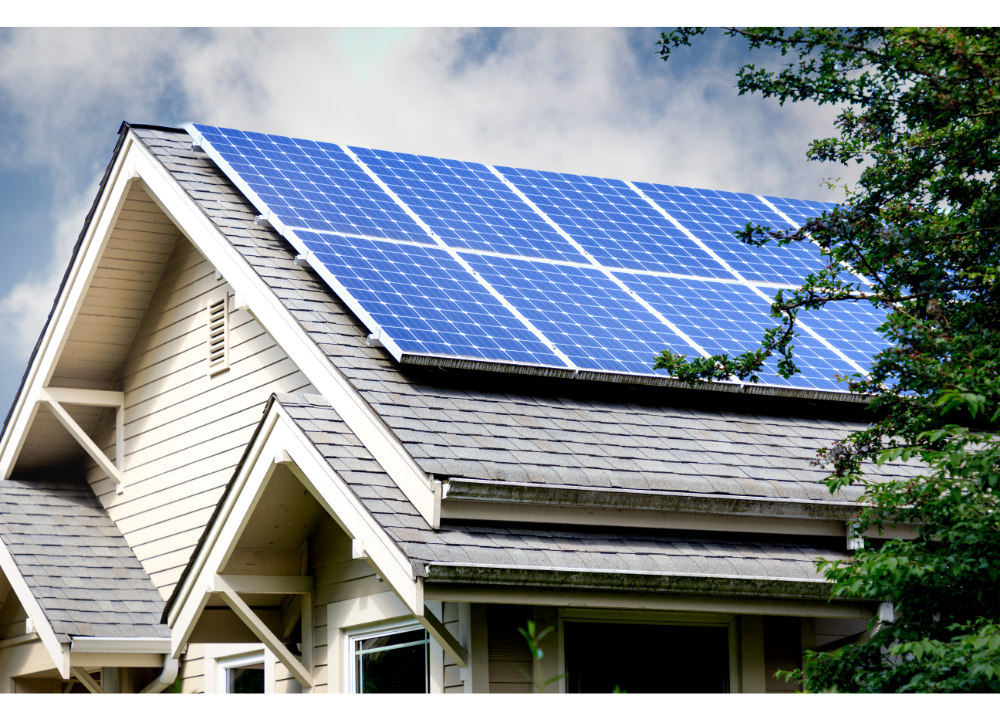
Summary: Install Solar PV to Reduce or Eliminate your electric bill with rooftop or ground mount solar
Description
Over 400 homes and businesses in Newburyport now have solar photovoltaic systems (PV) systems and the number grows steadily. These are in effect private power plants, collectively generating renewable energy. In addition to the residential and business solar systems, The City of Newburyport has invested heavily in community solar farms as well as solar systems on City Buildings. Currently, solar accounts for 5.8 MM Kwh which provides approximately 60% of all electrical energy needs for the City of Newburyport.
State and Federal Incentives
The Inflation Reduction Act reinstated a 30% federal tax credit for homeowners and condo owners installing solar (both equipment and installation costs qualify). This is retroactive back to Jan. 1, 2022 and will remain in effect until Dec. 31, 2032. The solar 30% tax credit can be paired with a 30% tax credit for battery storage and/or a 30% tax credit for an electric panel upgrade (capped at $600). See how much you would qualify for using this savings calculator from Rewiring America. If you can’t take all of the tax credit in the first year, you can carry it over to the next year.
And, lucky you! You live in Massachusetts where you also could receive a Massachusetts tax credit for the lesser of $1,000 or 15% of qualifying costs. In addition to the income tax credit, MA also ensures 100% tax exemption from both sales and property tax payments.
BONUS: if you own your own panels (even those with financing), you can register for monthly incentives from the Solar Massachusetts Renewable Target Program (SMART). Credits over your own usage may be donated to low-income households.
Helpful financing tip: Get your solar loan from a bank or other lending institution. If you finance through some solar companies, there are dealer fees, adding as much as 25% to the cost of the system. The company may also require you to surrender your tax credit to offset the cost of the system or take a larger loan covering the system cost before the tax credit.
Due to falling prices and generous incentives, you can often install a system that will pay for itself in 5-7 years if you have a suitable site. After that, it’s all positive cash flow as the panels generate power for 25 years or more. Retirees or single-earner families with lower incomes may qualify for Mass Solar Loan incentives and see even quicker payback. On top of that, solar panels increase the value of your home but due to current tax laws, the increase value in your home does not increase your property taxes.
Solar PV produces home-grown, safely-generated, clean electricity that contributes clean energy to the electric grid and reduces your CO2 emissions as well as pollutants such as fine particulates, nitrogen oxides, sulfur dioxide and ozone. Every solar kWh means one less fossil fuel kWh. The electricity produced can be used to help charge electric cars and transition away from burning oil and natural gas by powering high-efficiency heat pumps for home heating and cooling.
Need a new roof? If you install a new roof in conjunction with a solar PV array, the cost of the roof too is eligible for the State tax rebate!
Deep Dive
Click here for a deeper dive into the Federal Tax Credit for Solar PV: Homeowner’s Guide to the Federal Tax Credit for Solar Photovoltaics
Read the MassCEC Homeowners guide for Solar Power
Steps to Take
To search for solar installers and get all your questions answered, go to Energy Sage, a clearing house and no-charge independent consultant for solar installers (solar installers pay finder’s fees to EnergySage).
1. Enter your electricity bill info and approximate roof size on their website and get three free quotes emailed to you — no sales pitch involved! An Energy Sage staff person will contact you a few days later to answer ANY questions (technical, financial, etc.) and help you decide on an installer if you wish. You are not obligated to work through EnergySage, but it does thoroughly vet and integrate ongoing feedback from customers about installers.
2. Once you have met with a few installers and are close to selecting one, you can check state-tracked data on volume, the average cost per watt, panel type, and inverter type for various installers. Go to Essex County at MassCEC's residential Solar Cost and Performance page.
3. Your contracted installer will calculate the sizing and configuration of your system, and provide a financial estimate based on your electricity usage and available space. Once you have approved the design and signed a contract, the solar installer will handle the installation, including pulling permits and executing an Interconnection Agreement with National Grid.
4. After the required electrical inspections, National Grid will install a net meter and give you the approval to power up your system.
5. Let us know how it went! Add a Testimonial on this site.
- All Actions