Heating and Cooling with Heat Pumps
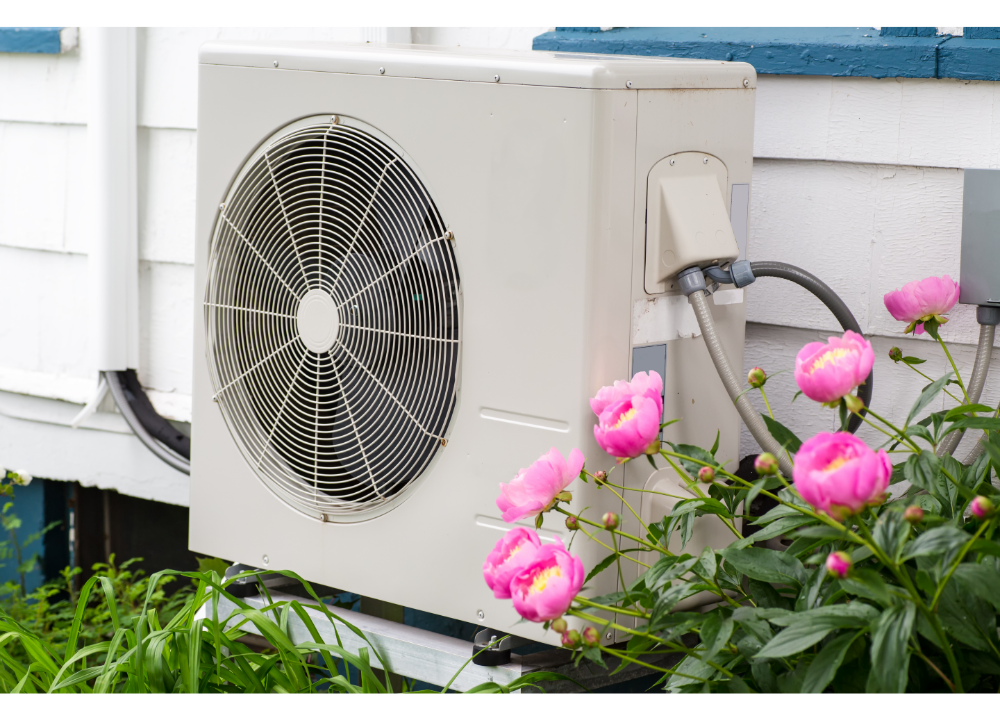
Summary: Heating and AC with Air source heatpumps
Description
Heat Pumps can be used as an alternative heating and cooling system. An ideal time to consider a heat pump is when you need to replace your existing heating or cooling system or when you want to add air conditioning because heat pumps provide cooling as well as heating. Savings can be more significant when replacing an oil or propane system with a heat pump. For older homes with no ducting, Air-Source Heat Pumps are an excellent way to add air conditioning for the entire home or room by room as needed.
There are several financial incentives to help you with the costs of air-source heat pumps:
State and Federal Incentives
There are several financial incentives to help you with the costs of air-source heat pumps:
30% federal tax credit for equipment and installation costs starting in 2023 with a limit of $2,000 per year. Electrically heated homes are NOT ELIGIBLE. Subject to a $14,000 HEERA cap (includes weatherization and heating equipment). Pair with a 30% federal tax credit for electric system upgrades with a cap of $600. Estimate your savings via this calculator from Rewiring America.
2022 Mass Save incentives are up to $10,000 for a whole home conversion from a non-gas heating system. Or, $1,250 per ton for a partial conversion capped at $10,000. Households may be eligible for enhanced incentives based on their annual income. Incentives are subject to change as the state updates incentive programs.
How the Mass Save rebates and federal tax credits may be combined remains to be determined. Please check back for updates.
Heat pumps are eligible for a 0% Mass Save Heat Loan.
In order to qualify for the MassSave incentives, you should first do everything you can to add the maximum insulation and reduce drafts significantly. We have exactly the thing for you: sign up for a no-cost Home Energy Assessment with our preferred partner All In Energy
CONSIDERATIONS:
WHEN
Ideal times to install a heat pump include:
• when you need to replace your existing heating or cooling system
• when you want to add air conditioning (because heat pumps provide cooling as well as heating)
• when you are installing on-site solar
The exciting news is that heat pump technology has advanced rapidly, and there are plenty of electric options to meet your comfort needs efficiently in both summer and winter. Planning ahead is important.
IMPACT
Average household carbon emissions will be reduced by approximately 2–3 tons annually with full conversion to a heat pump system from an existing fossil fuel system — depending on the size of the home and the nature of the existing heating system, as explained in the Deep Dive tab.
A more-gradual way to get started with heat pumps and reduce the fossil fuel you burn is to make the switch for only one or two rooms in your home. You can do this by having a "mini-split" heat pump system installed that covers those rooms, while the existing system heats the rest of the home. A great "target" for this strategy is any room(s) or area(s) that tend to be uncomfortably cool or warm, depending on the season.
Start by developing a "Heat Pump Plan" before the day when your existing heating system needs to be replaced. Because choosing an installer and equipment can be a time-consuming and confusing process, waiting until you are out of heat in the winter to start researching heat pump options can potentially result in choices that are not fully informed.
For more information, see the Steps to Take and Deep Dive tabs.
Deep Dive
A primer/Q&A on heat pumps follows, below.
What are heat pumps?
Traditional heating systems burn fuel to create heat; heat pumps work by “pumping” heat into or out of a building or home. Though they require electricity to operate, heat pumps use only 20–50% of the electricity that would be used by traditional electric resistance heaters. A heat pump can supplement your existing heating system or completely replace it. Heat pumps provide the greatest economic benefit if your home is currently heated with oil, propane, or electric baseboards. Here are some more-detailed resources on heat pumps:
• Energy Sage
• MassCEC
How important are heat pumps for meeting Newburyport’s net zero carbon goal?
For most Newburyport households, the single most impactful Action to cut carbon emissions is to stop burning oil, gas, or propane for heat, and switch to an electric heat pump system. As the table below shows, this can cut an average of 3.2 tons of carbon (MTCO2e) every year; the reduction will be a little greater for homes previously heated with oil, and a bit less for those using gas.
Heat pumps are even more impactful when the electricity to power them is 100% renewably sourced. The emissions reduction realized by using 100% renewable, zero-emission electricity for your heat pump system will average about 2 tons annually on top of the 1.5 ton reduction from "greening" (using 100% renewable) the rest of the electricity used by the average household.
The Top 6 Actions for Cutting Household Carbon Emissions:
Average Tons Reduced/Year
|
Switch to Heating & Cooling with Heat Pump(s) |
3.2 tons |
|
Insulate & Weatherize to the Max |
1.5 tons |
|
Drive Electric (1 car) |
2.6 tons |
|
Install On-site Solar |
(2.5 tons) |
|
Eat More Plant-Based Meals |
0.6 tons |
Sources: MassEnergize Carbon Calculator Methodology, Energize Newburyport conversions to metric tons based on 2,204.62 pounds/metric ton.
Reductions will vary from one household to the next, depending on the particulars, but if a household's members can do all the things in this table (there are 6 Actions listed; all the APC Green actions are counted as one), they would eliminate approximately 13 tons of carbon from their emissions each year.
What is the basis for the estimate of 3.2 tons/year emission reduction?
This estimate of emissions reduction is intended as an approximation of typical, average, or potential results in order to convey relative magnitudes of various Actions; this is not a prediction of actual results of individual heat pump installations. Using MassEnergize Carbon Calculator Methodology, MassEnergize estimated a 7,199 pounds/year reduction by assuming that an oil furnace is partially displaced by a high-efficiency, central ducted air-source heat pump, with energy savings from the Technical Reference Manual used for evaluation of MassSave programs. For this partial displacement scenario, it appears that this MassSave analysis had assumed HSPF (Heating Seasonal Performance Factor) values for heat pumps from 8.2–9.6, which are relatively inefficient (i.e., lower than the HSPFs up to 12 for ductless mini-split heat pumps [ductless mini-split heat pumps/DMSHP]).
Source: Energy Optimization Study, October 9, 2018, Table 3, page 7. More generally, it may be possible to achieve better emission reductions if existing oil burners are removed, even if electric resistance heat is used for backup during very cold hours/days.
How does the electricity emission factor affect the emissions reduction estimates?
MassEnergize uses an electricity emissions factor of 580 Lb/MWh from MassDEP. Energize Acton converted to metric tons using 2,204.62 pounds/metric ton. Notes on electricity emissions factor: The DEP factor of 580 Lb/MWh is for Massachusetts as of 2017. Energize Newburyport estimates that, since then, that factor should have dropped by about 11% through 2021, to 517 — based on trends of ISO-NE’s average emission factor for 2018 and 2019, and then adjusted for remaining years based on the increase in the RPS Standard (2% per year).
What is the difference between “air source” and “ground source” heat pumps?
There are two basic types of heat pumps:
• Air-Source Heat Pumps (ASHPs) exchange heat with the air outside your home. Some ASHPs are efficient down to sub-zero outdoor temperatures. ASHPs for homes that already have ducting are called central heat pumps, while so-called ductless "mini-splits" are suited for homes that don’t have existing ducting. All ASHPs provide energy-efficient heating and cooling for your home. ASHPs use 30–50 percent as much electricity as traditional electric resistance heaters, such as electric baseboards. Download the NEEP Air-Source Heat Pump Buyers Guide for more information.
• Ground-Source Heat Pumps (GSHPs) can provide highly efficient heating, cooling, and water heating by utilizing the nearly constant temperature underground to heat or cool your home. GSHPs are typically the most efficient type of heat pump, but installation is more complex and the initial cost is higher than for ASHPs. See more here.
What are the different types and configurations of heat pump systems?
There are three main options. Experienced heat pump professionals can help you compare the pros and cons of these configurations.
• Install one central heat pump (air-source or ground-source) to take the place of your existing furnace and use your existing air ducts.
• Configure a heat pump system with one or more "mini-split" heat pump units to serve one or two rooms each.
• Retain your existing furnace or boiler (if it's not too old) and start by installing one mini-split to supply one or two rooms that are used frequently. This will provide you with some experience with heat pumps, and may help when you eventually complete your heat pump system by removing your fossil fuel heating equipment — at which time you can install a central heat pump and/or multiple mini-splits, as appropriate.
Once you have an idea of what general heat pump configuration you think will work best for you, dig into the following details before getting price bids:
• Be sure you are looking at "cold climate" heat pumps that will work well in Newburyport’s cold winter weather. Look for the highest HSPF ratings, as well as the SEER (Seasonal Energy Efficiency Ratio) rating, and ask for model numbers so you research them and get independent information.
• If you are retaining a fossil fuel heating system (at least temporarily as a backup), make sure you get careful estimates of how much fuel will be used and ask for a set of smart or "integrated" controls that will manage the multiple heat pump(s) and other systems (to prevent potential inefficiencies).
• If you are not retaining your old system, ask if your new heat pump(s) will include internal electric resistance heating for the coldest hours of the winter, or whether the heat pump(s) will operate at our coldest temperatures (e.g., 0°F or below).
• Make sure any price quotes specify that the outside compressor unit(s) will be located appropriately for airflow, elevated to protect them from snow, and kept out of the way of any dripping water or ice.
Steps to Take
1. Assemble basic information about your existing heating system, especially the date when it was installed and a record of service indicating any emission tests or efficiency measurements. Also, review the quantity of oil or natural gas you have used each year, or the costs you have paid; this will help determine the size of your heat pump system needs to be. Your energy use data will also be a useful input into a Home Energy Assessment or a plan to Insulate and Weatherize your home so as to reduce your heating requirements as much as you can before seeking a quote on a heat pump system. This will allow you to buy a smaller, less-expensive system (see Step 3).
2. Look for heat pump contractors/installers with plenty of heat pump experience. Schedule visits to your home to get to know potential contractors, and ask them for local references. Ask for suggestions for size, configuration, and types of equipment, and request initial pricing, but make it clear that before you make any decisions you will be considering all the elements that could affect your heat pump purchase (see the next Step). Make sure that the heat pump installer you ultimately hire is eligible to access all the heat pump incentives from MassSave, MassCEC, and other sources.
3. Get information about other energy measures that could affect your heat pump decision, starting with any remaining opportunities to reduce your “heat loss” with insulation and weatherization (thereby reducing the size of the heat pump you would need, and thus, the cost). To ensure that you're reducing heat loss get a free home energy assessment from our partner All in Energy
5. Compare and choose between different types and configurations of heat pump systems. Determine whether a ground source heat pump is feasible in your location. If so, this will be the most efficient type of heat pump with the lowest electricity use. The high initial price for installation may be an obstacle unless you take out a loan for it (0° interest HEAT Loans are available). Alternately, air source heat pumps are much less expensive to install, and offer the choice of installing one central air source heat pump to replace your existing furnace and use your existing air ducts, or configuring one or more "mini-split" heat pump units to serve one or two rooms each. Configuration options are discussed further under the Deep Dive tab.
6. Once you have identified what heat pump configuration will work best for you, get price quotes for a range of heat pump capabilities. For example, make sure you are looking at "cold climate" heat pumps that will work well in Newburyport’s cold winter weather. Look for the highest HSPF (Heating Season Performance Factor) ratings, as well as the SEER (Seasonal Energy Efficiency Ratio) rating; ask for model numbers so you can research independent information on the equipment. Ask your contractors to show you the NEEP (Northeast Energy Efficiency Partnerships) ratings of each heat pump model you consider. See additional information under the Deep Dive tab.
7. Once you have some options priced out, talk them over with independent sources of advice and sign a contract for the best option for your home. Energize Newburyport may soon offer references for coaching or local case studies but, in the meantime, contact the Energy Specialist who did your Home Energy Assessment, or other energy efficiency providers for suggestions of heat pump experts.
8. Once you've transitioned to a heat pump system for your home, please write a Testimonial for this site with your story: what worked, what was difficult, how well contractors met your needs, and how comfortable and affordable your heat pump system has been. Thanks!
- All Actions